Question 81 · 211 in bank
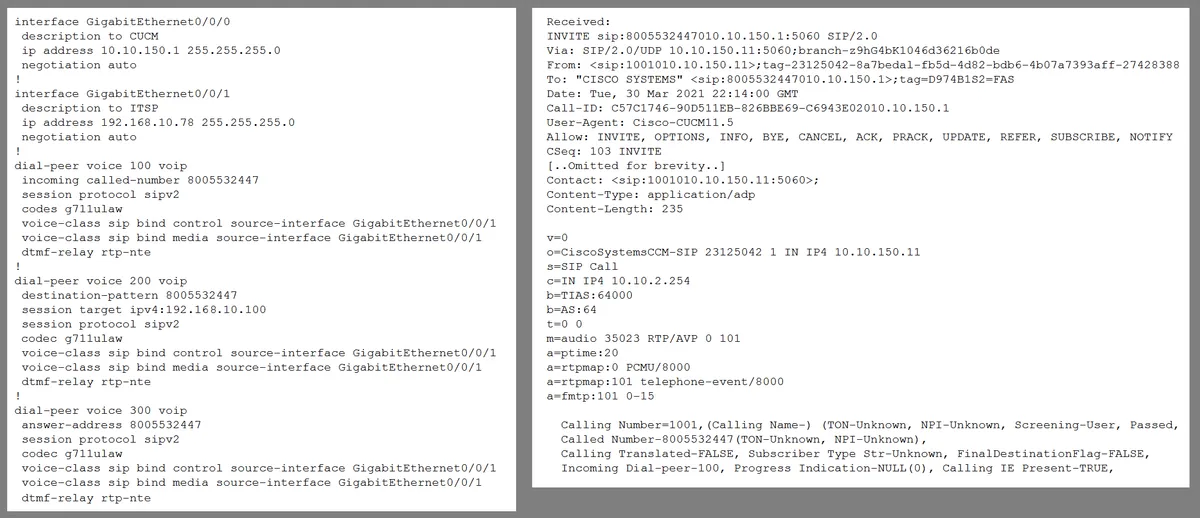
Refer to the exhibit. An engineer is troubleshooting a call-establishment problem between Cisco Unified Border Element and Cisco UCM. Which command set corrects the issue?
Show answer
Answer: B
Implementing Cisco Advanced Call Control and Mobility Services (CLASSP)211 questions across 22 pages are complete and free, with no account or card.
211 questions in this bank
Free access · progress saved on this device
Refer to the exhibit. An engineer is troubleshooting a call-establishment problem between Cisco Unified Border Element and Cisco UCM. Which command set corrects the issue?
Answer: B
A new deployment is using MVA for a specific user on the sales team, but the user is having issues when dialing DTMF. Which DTMF method must be configured in resolve the issue?
Answer: A
An administrator is working on an issue between the customer's Cisco Unified Border Element and the service provider. The provider only wants to see mid-call signaling from the Cisco Unified Border Element for fax calls. Which command must be configured on Cisco Unified Border Element?
Answer: C
CollabCorp is a global company with two clusters, emea.collab.corp and apac.collab.corp. URI dialing is implemented and working in each cluster. The company configured routing between clusters to make inter-cluster calls via URI, but this is not working as expected. Which two configuration elements should be checked to resolve this issue? (Choose two.)
Answer: CE
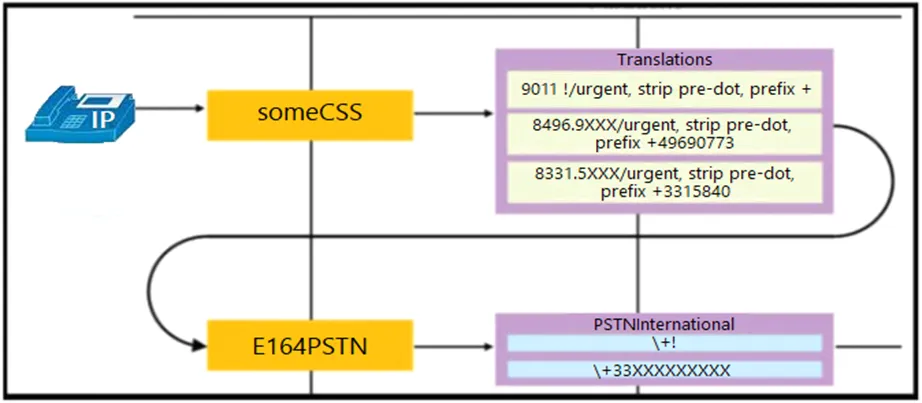
Refer to the exhibit. A user dials 84969010 and observes that the call is not routed immediately. The administrator notices that after matching the fixed-length translation pattern, the call hits the \+! pattern and waits for interdigit timeout. What should be configured to ensure that the call routes out immediately?
Answer: C
A customer is using a SIP trunk to route calls to ITSP. To decrease the possibility of downtime, the customer invested in a failover device. How does the customer ensure reachability to ITSP, so that if one device on ITSP fails, the calls will be routed to another device?
Answer: A
A customer routes PSTN calls to ITSP through a SIP trunk on Cisco UCM that forwards and receives calls to and from ITSP. ITSP is set to send an E.164 number when the customer’s extension is four digits. Which action should be taken to route the incoming calls to four-digit extensions?
Answer: C
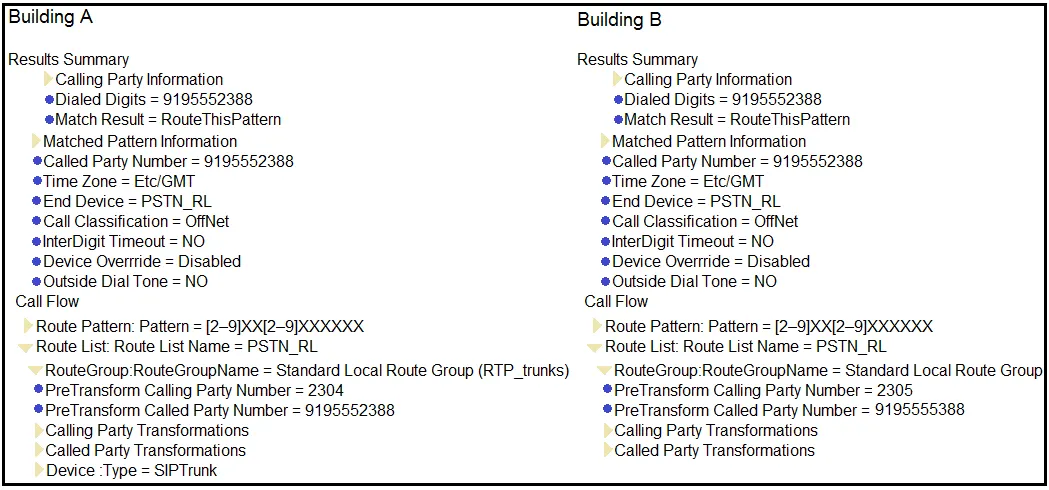
Refer to the exhibit. A standard local route group is configured for long-distance calls. Calls from building A succeed, but calls from building B fail. On the system, each building has its own device pool. The DNA tool is used to test the configuration. How is this issue resolved?
Answer: D
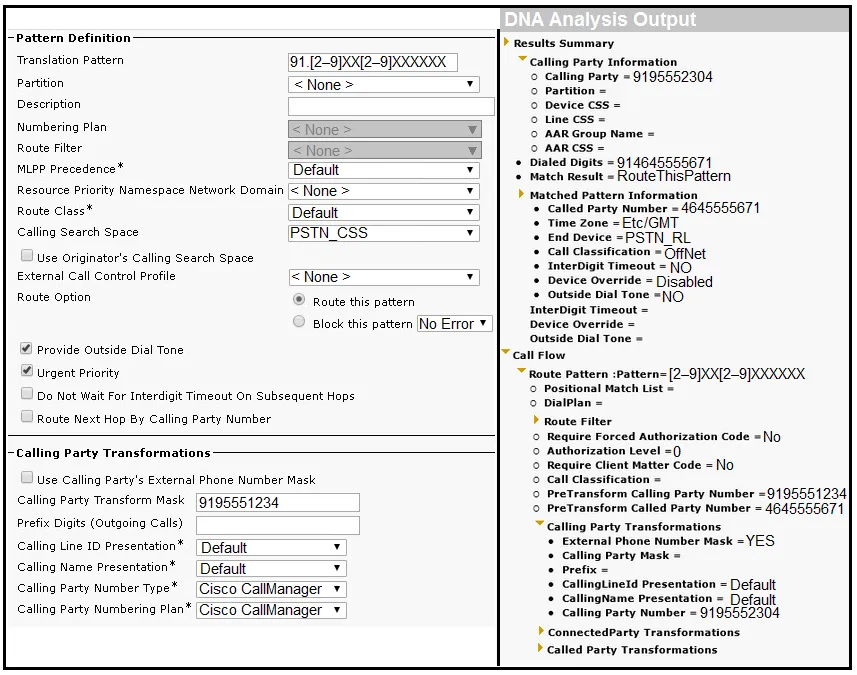
Refer to the exhibit. For long-distance calls, users must prefix their dialed number with “91”. The translation pattern was created to strip the 91 as the PSTN expects a 10-digit number. The PSTN also requires the calling number to be set to 9195551234. However, the service provider has said calls with a different calling number are being received. How is this issue resolved?
Answer: B
A single site reports that when they dial select numbers, the call connects, but they do not get audio. The administrator finds that the calls are not routing out of the normal gateway but out of another site's gateway due to a TEHO configuration. What is the next step to diagnose and solve the issue?
Answer: B
Keyboard:J Kmove between questionsA–Dselect an answerRshow or hide the answer← →change page
300-815 practice, question 81. 211 questions available.
Version 1.0.0. How we source questions