Question 191 · 334 in bank
What is a difference between a threat and a risk?
Show answer
Answer: C
Understanding Cisco Cybersecurity Operations Fundamentals (CBROPS)334 questions across 34 pages are complete and free, with no account or card.
334 questions in this bank
Free access · progress saved on this device
What is a difference between a threat and a risk?
Answer: C
A SOC analyst observed Ursnif malware at the SIEM dashboard. The analyst opened the PCAP file to search the certificate issue data. Where must the analyst navigate?
Answer: A
What is the difference between an attack vector and an attack surface?
Answer: C
An attack surface represents the overall set of vulnerabilities that an attacker could potentially exploit to launch an attack. This can include hardware, software, network protocols, configurations, and user accounts. By identifying and assessing the attack surface, defenders can understand the overall security posture of their system or network and take steps to reduce its exposure to potential attacks. An attack vector, on the other hand, refers to the specific method or path that an attacker uses to exploit a particular vulnerability within the attack surface. An attacker may use multiple attack vectors to reach their goal, such as social engineering, malware, or exploiting a specific software flaw.
Source: Adapted from community discussion — drdecker100
Which technique is a low-bandwidth attack?
Answer: A
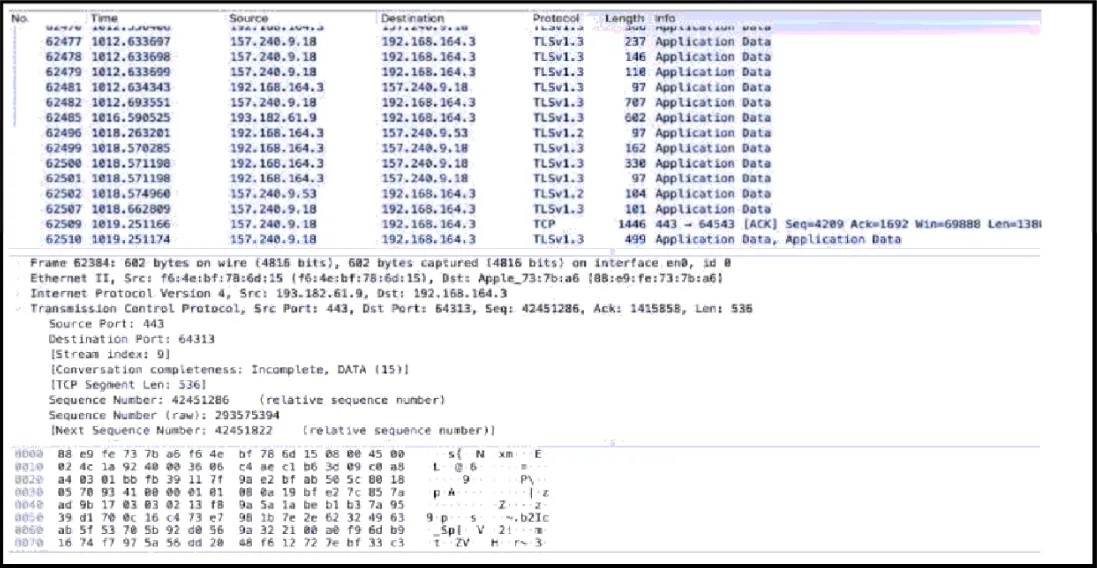
Refer to exhibit. An analyst performs the analysis of the pcap file to detect the suspicious activity. What challenges did the analyst face in terms of data visibility?
Answer: C
What matches the regular expression c(rgr)+e?
Answer: A
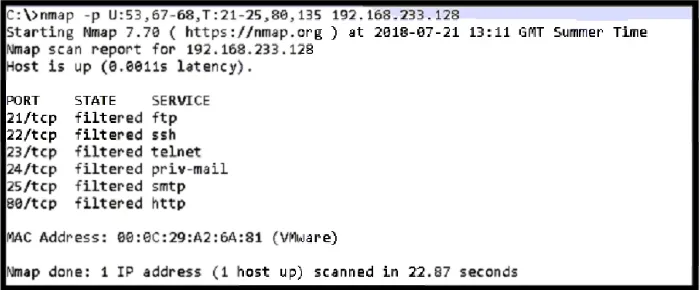
Refer to the exhibit. An attacker scanned the server using Nmap. What did the attacker obtain from this scan?
Answer: A
Which attack method is being used when an attacker tries to compromise a network with an authentication system that uses only 4-digit numeric passwords and no username?
Answer: C
A company's cyber security team performed a phishing simulation campaign for employees and performed security awareness trainings to affected personal. According to NIST.SP800-61, at which phase of incident response is this action?
Answer: C
How is attacking a vulnerability categorized?
Answer: C
"C" is correct Here are the steps of the Kill Chain Model. The example are in the context of the question 1) Reconnaissance - identified vulnerabilities 2) Weaponization - prepare (in lab) the weapon, for example a file with malware code. 3) Delivery - transmit the file (e-mail, website, etc) 4) Exploitation - trigger the weapon (execute the code), exploiting the vulnerability 5) Installation - the weapon installs a backdoor (server) 6) Command and control (C2 or CnC) - connection to the treat actor 7) Actions on objectives - do the job (stealing information, for example)
Source: Adapted from community discussion — anonymous1966
Keyboard:J Kmove between questionsA–Dselect an answerRshow or hide the answer← →change page
200-201 practice, question 191. 334 questions available.
Version 1.0.0. How we source questions