Question 81 · 189 in bank
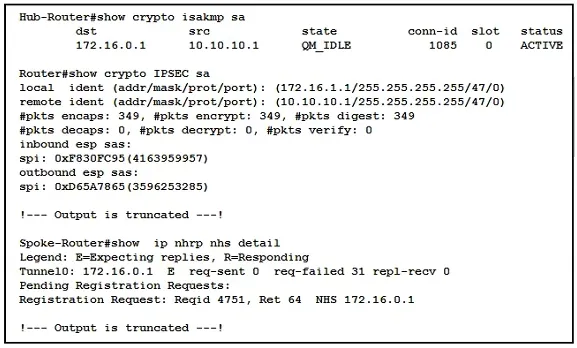
Select 2A Cisco IOS router is reconfigured to connect to an additional DMVPN hub that is a part of a different DMVPN phase 3 cloud. After this change was made, users begin to experience problems accessing corporate resources over both tunnels. Before the additional tunnel was created, users could access resources over the first tunnel without any issues. Both tunnels terminate on the same interface of the router and use the same IPsec proposals. Which two actions resolve the issue without affecting spoke-to-spoke traffic in either DMVPN cloud? (Choose two.)
Show answer
Answer: BD
Explanation
"D and E" are the correct answer selections here: To resolve the issue without affecting spoke-to-spoke traffic in either DMVPN cloud when connecting to an additional DMVPN hub that is part of a different DMVPN phase 3 cloud, the recommended action is: Specify the tunnel destination in each tunnel and assign a unique tunnel key to each tunnel. This approach ensures that each DMVPN tunnel has a unique tunnel destination and a unique tunnel key, preventing conflicts between the two DMVPN clouds. It allows the router to distinguish between the two tunnels and correctly route traffic to the respective hubs. Using the same shared IPsec profile for both tunnels and specifying the tunnel destination in each tunnel might not be sufficient to prevent conflicts in this scenario. Assigning unique tunnel keys is crucial to maintaining the separation of the tunnels. Therefore, the correct option is to specify the tunnel destination in each tunnel and to assign a unique tunnel key to each tunnel.
Source: Adapted from community discussion — kylesam2017