Question 81 · 193 in bank
Select 2Which Snowflake objects can be used in a data share? (Choose two.)
Show answer
Answer: BD
SnowPro Advanced: Architect193 questions across 20 pages are complete and free, with no account or card.
193 questions in this bank
Free access · progress saved on this device
Which Snowflake objects can be used in a data share? (Choose two.)
Answer: BD
A company has an external vendor who puts data into Google Cloud Storage. The company's Snowflake account is set up in Azure. What would be the MOST efficient way to load data from the vendor into Snowflake?
Answer: B
How can the Snowpipe REST API be used to keep a log of data load history?
Answer: C
By calling this command repeatedly, it is possible to see the full history of events on a pipe over time. Note that the command must be called often enough to not miss events. Events are retained for a maximum of 10 minutes. https://docs.snowflake.com/en/user-guide/data-load-snowpipe-rest-apis#endpoint-insertreport
Source: Adapted from community discussion — Acaer
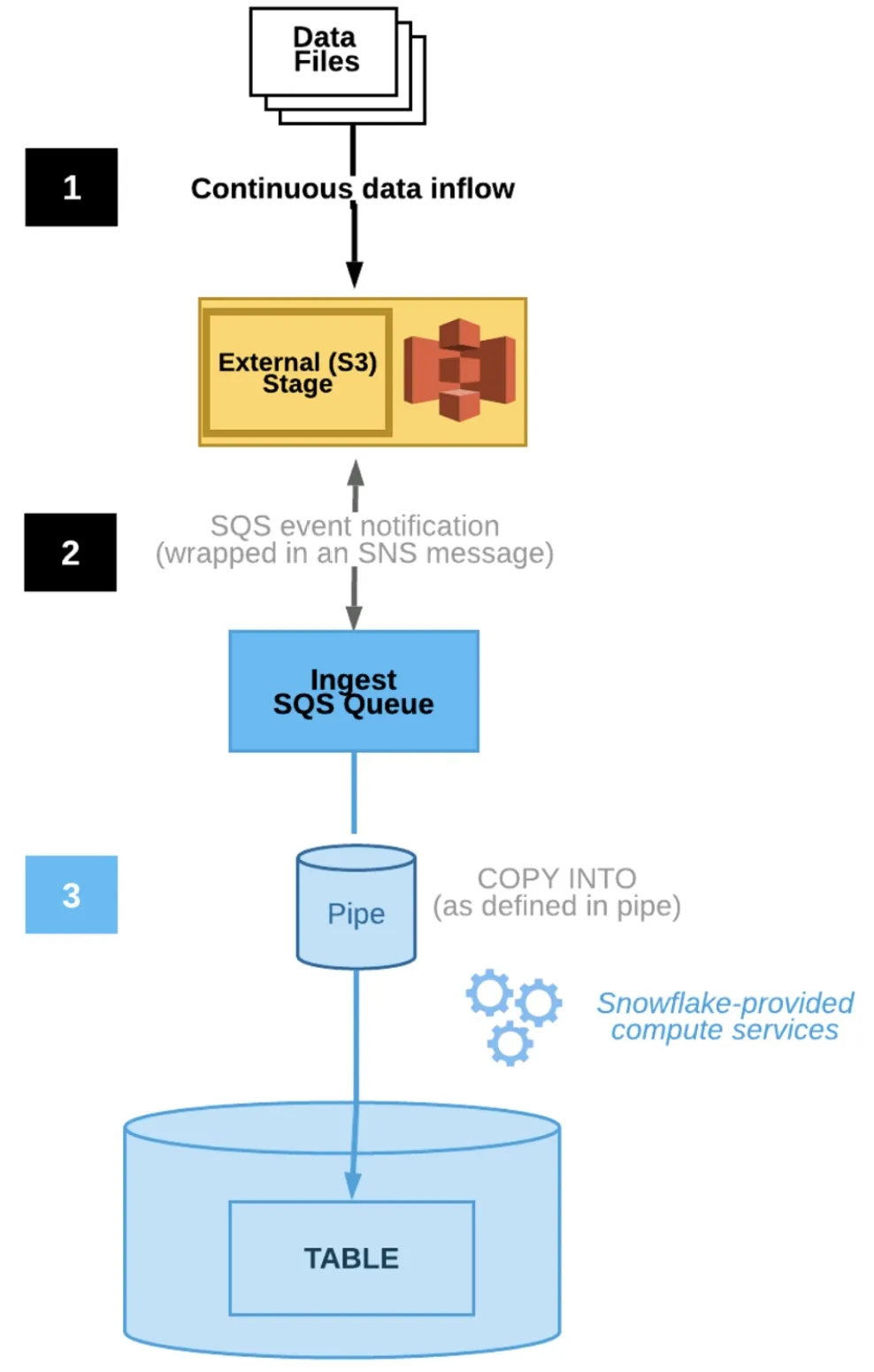
The diagram shows the process flow for Snowpipe auto-ingest with Amazon Simple Notification Service (SNS) with the following steps: Step 1: Data files are loaded in a stage. Step 2: An Amazon S3 event notification, published by SNS, informs Snowpipe — by way of Amazon Simple Queue Service (SQS) - that files are ready to load. Snowpipe copies the files into a queue. Step 3: A Snowflake-provided virtual warehouse loads data from the queued files into the target table based on parameters defined in the specified pipe. If an AWS Administrator accidentally deletes the SQS subscription to the SNS topic in Step 2, what will happen to the pipe that references the topic to receive event messages from Amazon S3?
Answer: D
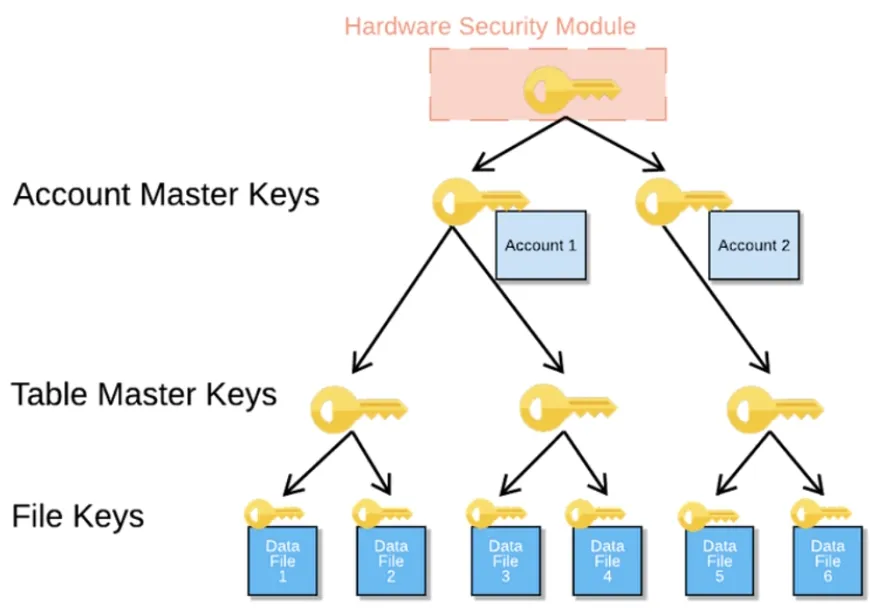
When activating Tri-Secret Secure in a hierarchical encryption model in a Snowflake account, at what level is the customer-managed key used?
Answer: B
What are characteristics of the use of transactions in Snowflake? (Choose two.)
Answer: CE
Company A would like to share data in Snowflake with Company B. Company B is not on the same cloud platform as Company A. What is required to allow data sharing between these two companies?
Answer: C
Answer A. It cannot be answer C, because the companies would need to be in the "within the same organization", according to Snowflake documentation for replication.
Source: Adapted from community discussion — cloud_ranger
A company is designing high availability and disaster recovery plans and needs to maximize redundancy and minimize recovery time objectives for their critical application processes. Cost is not a concern as long as the solution is the best available. The plan so far consists of the following steps: 1. Deployment of Snowflake accounts on two different cloud providers. 2. Selection of cloud provider regions that are geographically far apart. 3. The Snowflake deployment will replicate the databases and account data between both cloud provider accounts. 4. Implementation of Snowflake client redirect. What is the MOST cost-effective way to provide the HIGHEST uptime and LEAST application disruption if there is a service event?
Answer: A
A company's Architect needs to find an efficient way to get data from an external partner, who is also a Snowflake user. The current solution is based on daily JSON extracts that are placed on an FTP server and uploaded to Snowflake manually. The files are changed several times each month, and the ingestion process needs to be adapted to accommodate these changes. What would be the MOST efficient solution?
Answer: A
json is prepared from some table(tables) and extracts to FTP. they can create a share with secure view which will contain all data with logic in place
Source: Adapted from community discussion — AleksM
Why might a Snowflake Architect use a star schema model rather than a 3NF model when designing a data architecture to run in Snowflake? (Choose two.)
Answer: DE
Keyboard:J Kmove between questionsA–Dselect an answerRshow or hide the answer← →change page
ARA-C01 practice, question 81. 193 questions available.
Version 1.0.0. How we source questions